




End Of The Oregon Trail Interpretive Center Offers Accessible Look Into Oregon’s History
By Guest Author: Lilly Longshore
It was a long and grueling trek from Independence, Missouri, to Oregon City along the nearly 2,000-mile Oregon Trail. An astounding 300,000 to 500,000 people walked this dusty, difficult journey between 1843 and 1869, risking everything to start anew in the Oregon Territory. Their goal? Claim a 320-acre parcel of land at the Government Land Office in Oregon City.
Today, visitors of all abilities can connect with that legacy at the End of the Oregon Trail Visitor & Interpretive Information Center, located in historic Oregon City. Guests can pack their own wagon at the general store, dress as pioneers and learn about those hearty souls who made this arduous journey. Exhibits also describe the unique experiences that African Americans endured, as well as the devastating impact westward settlement had on Native tribes.
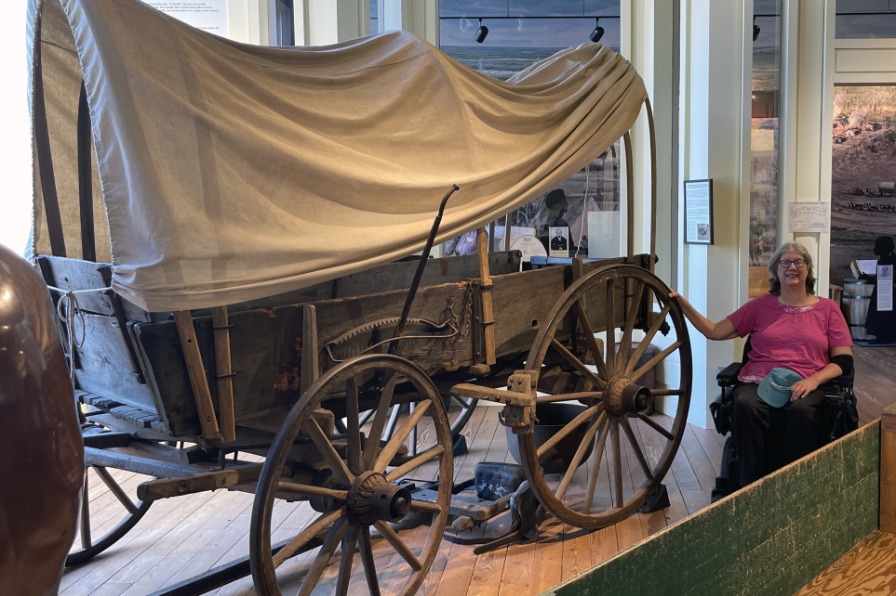
The Interpretive Center, complete with wood plank flooring, is thoughtfully designed for ample navigation room around displays, including around wagons and an authentic taxidermy bison head mount. Visitors are encouraged to engage with hands-on displays through touching and feeling furs, various tools, general store goods and household items.
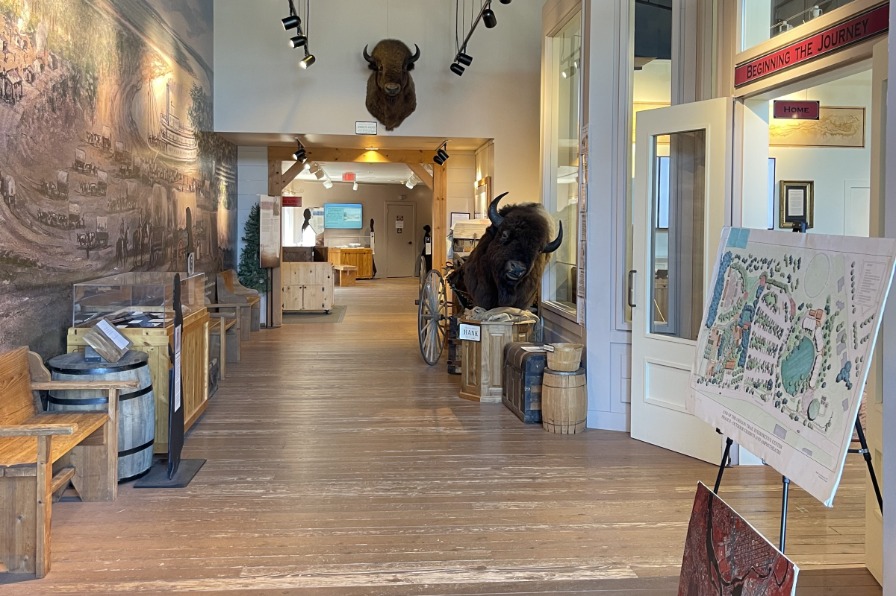
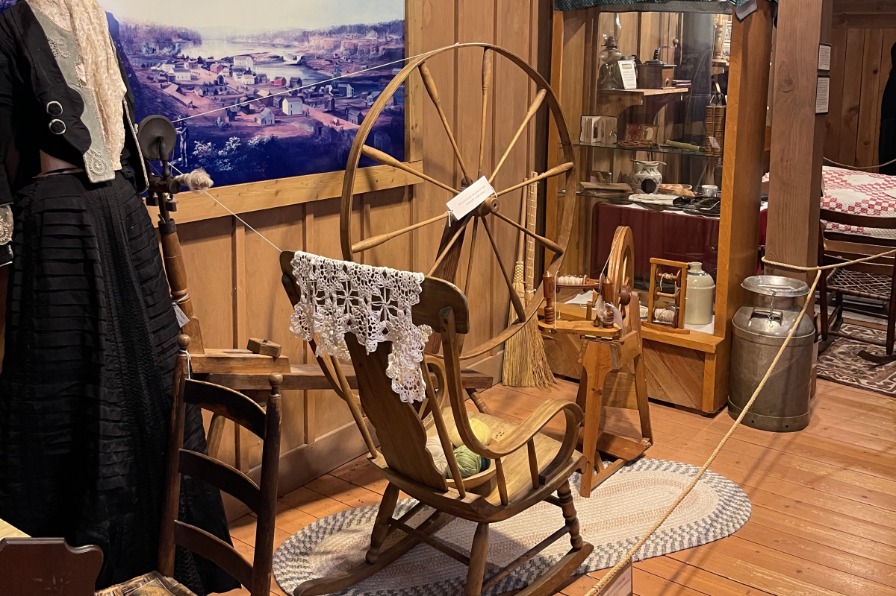
Two very informative and well-done movies are presented in the theater, one about the pioneers and another about the Native peoples of this area who were displaced by the settlers. One room is filled with displays of typical pioneer living areas, furniture, blacksmith tools, an olden wash machine and more — these help to paint a vivid picture of what life was like for early Oregon settlers.
Photos and excerpts from pioneers’ journals cover both walls along a wide, easy-to-wheel corridor, telling touching and very personal stories of the challenges, losses and triumphs of the brave souls who came across the Oregon Trail. I was touched by the pioneers’ many observations of the “Nation’s Longest Graveyard,” as some called the Oregon Trail. Many perished from cholera and were hastily buried along the trail — at six graves per mile, one excerpt read.
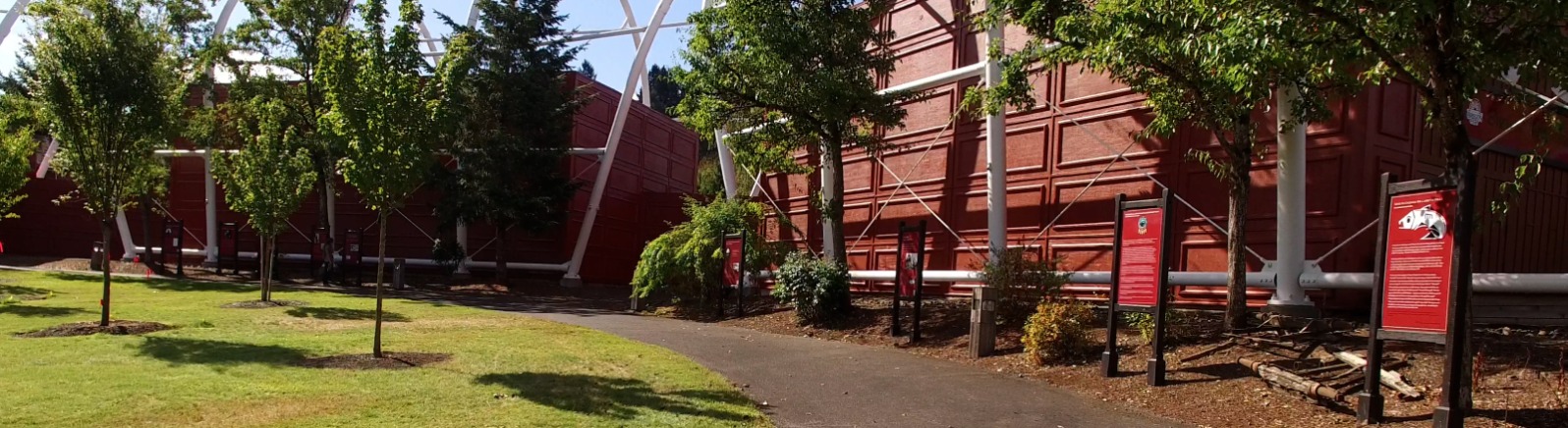
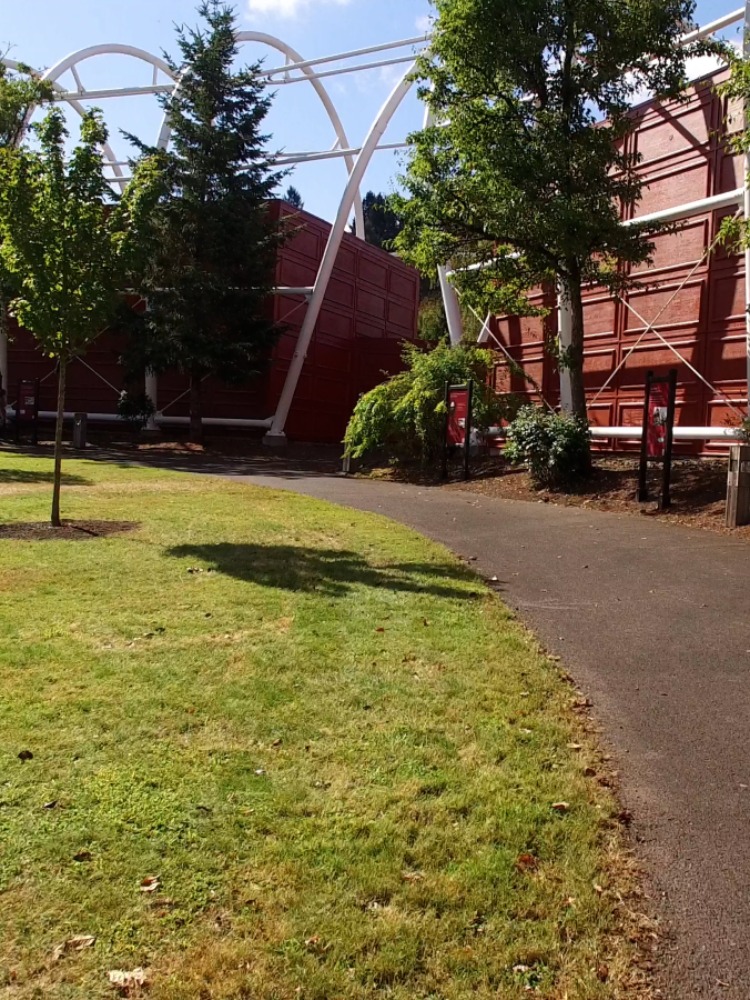
Outside, accessible surfaces are packed dirt, grass and asphalt. The wheelchair-friendly Pioneer Heritage garden exhibits vegetation commonly planted by pioneers, like asters, marigolds, carrots and lettuces. The accessible, mostly dirt, mini-Oregon Trail replica is worth a roll. It features a trail landmark replica of Independence Rock, informative plaques, and murals of animals which were commonly seen along the original trail. A wheelchair-friendly visitors center and gift shop, and nicely accessible restrooms are also on the grounds.
There will be even more to see and do at the End of the Oregon Trail Visitor & Interpretive Information Center this coming year. Plans are in place to incorporate the AIRA mobile app capability, which provides live visual description service for those who are blind or low vision. In addition, a new enclosure for the interpretive center will house a unique collection of 25 antique wagons that have traveled the Oregon Trail. A return visit is definitely in my future!
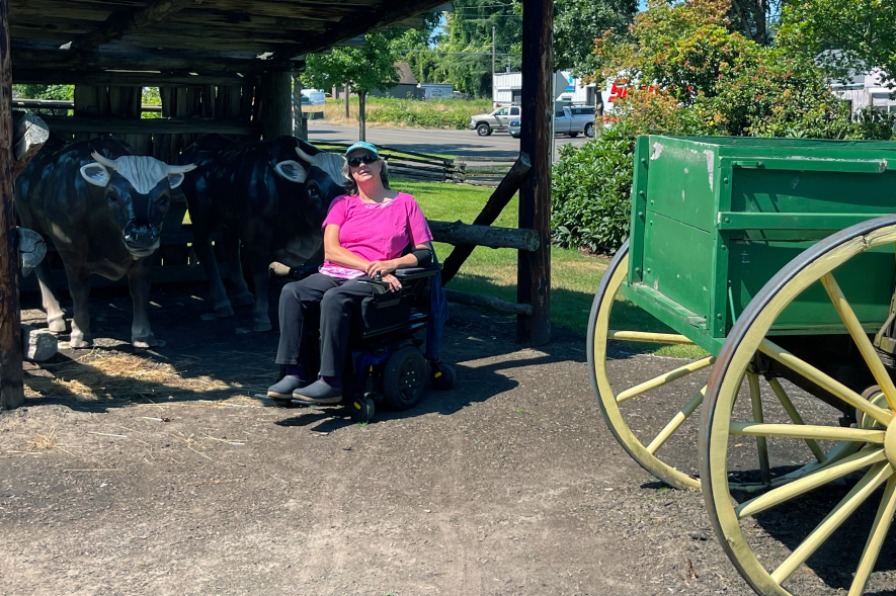

Lilly Longshore is an accessible travel writer, a speaker and an advocate/educator for those with physical disabilities and vision impairments. She has written for various magazines including New Mobility, PN Magazine and Cascade Journal, as well as for various travel blog sites. Passionate about traveling and sharing possibilities with others, she adventures via wheelchair and shares the world of travel possibilities through her writing. After retiring from civil/environmental engineering, she continued to give back to her community by serving as parent representative on the Board for the Washington State School for the Blind, on Washington’s Governor’s Committee on Disability Issues and Employment and is currently serving as Community Outreach Chair for Clark County, Washington’s Accessible Communities Advisory Committee. Connect with Lilly through her Wheeling the World Facebook page. Photo by Carla Foth Christian.