





Adaptive Mountain Biking In The Molalla River Recreation Corridor
By Guest Author: West Livaudais
Late summer in Oregon means long golden mornings, ripe blackberries along the roadside and the draw to escape into the cool woods. This past August, my friend Loehn and I loaded up our e-assist adaptive mountain bikes and set our sights on the rugged beauty of the Molalla River Recreation Corridor. Our mission: explore how accessible the mountain bike trails are in the area.
I also wanted to get reacquainted with my old friend, the Huckleberry Trail. Back in 2000, when I first took up mountain biking, this trail was my go-to escape. I hadn’t been back since, and I was curious if my wider adaptive mountain bike could traverse these trails.
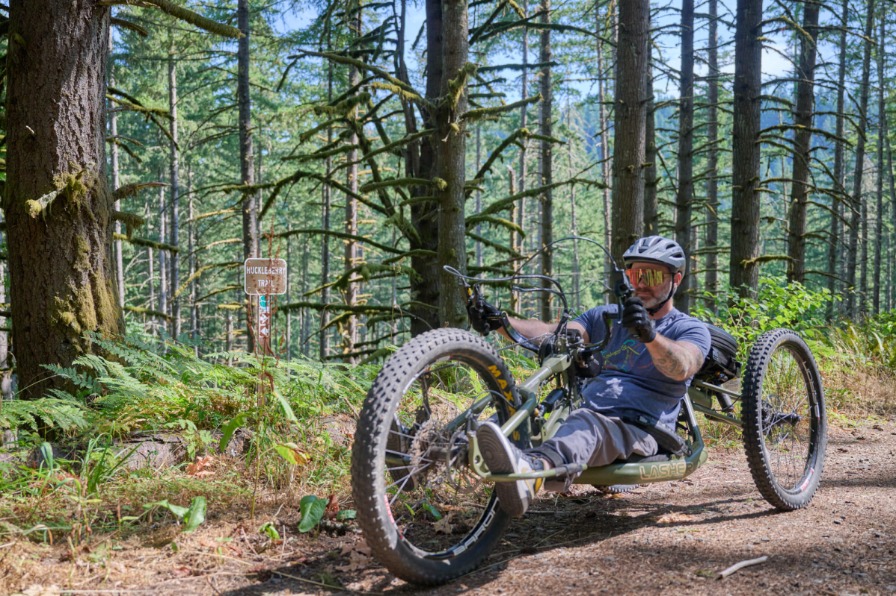
The Molalla River Recreation Corridor offers excellent mountain bike trails.
The drive along South Fork Molalla Road is stunning on its own — the river flashes through the trees, dotted with summer floaters and scattered camps. Access is by paved road with frequent gravel pullouts and parking lots. We parked around mile 4.5 at the AmeriCorps Trailhead, a wide gravel lot perched above the Molalla River.
As a manual wheelchair user, I’ve learned that the hardest part of many outdoor adventures is just getting on the trail. In Oregon, most mountain bike trails are singletrack and too narrow for adaptive bikes. Many trailheads are blocked with large boulders or metal gates meant to keep out off-road vehicles — which also unintentionally keep out adaptive mountain bikers like me.
Sure enough, the AmeriCorps Trailhead was gated. Thanks to help from friends, we maneuvered our bikes around it and began the climb. I never bike alone — it’s safer, tactical and more fun.
The AmeriCorps Trail pitches upward right out of the gate — 200 feet of elevation gain at a steady 5-6% grade. My arms burned, and the steep gravel incline was an extra challenge because my front-wheel-drive bike slipped and spun the whole way up. It was tough, but as we crested onto the Huckleberry Trail, it felt like we had crossed into another world: quiet, shaded and lush.
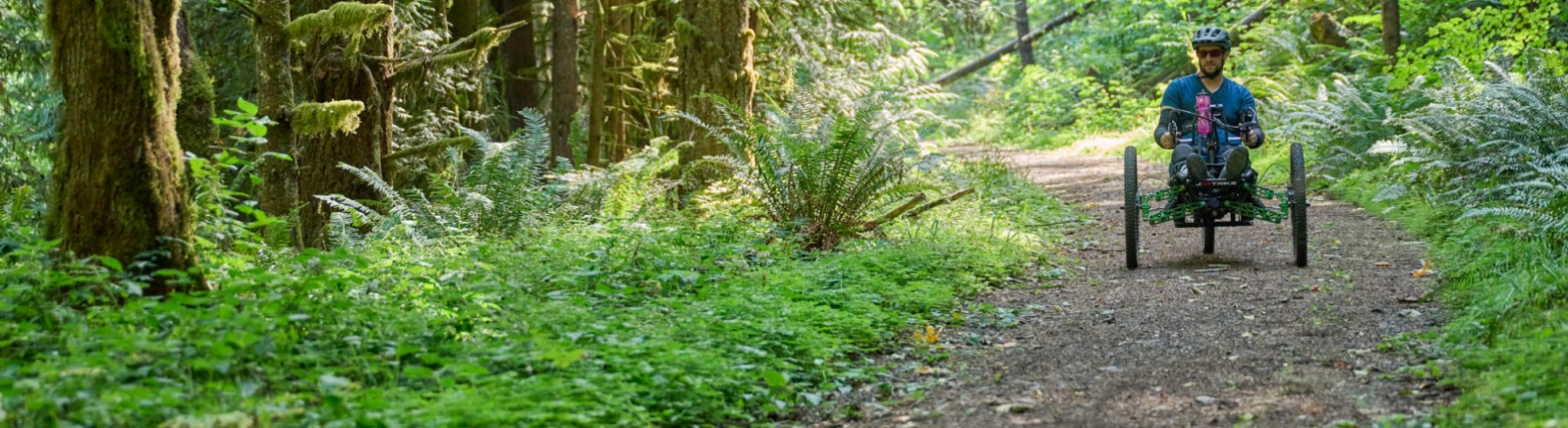
Huckleberry Trail is likely an old logging road carved into the ridge, now reclaimed by moss, ferns and towering Douglas fir. It’s mostly flat and curvy, winding deep into the forest. At multiple points we crossed small creeks that had carved miniature ravines down the mountain.
The canopy kept things cool even as the day heated up. There were no hikers, no horses and barely a whisper of human activity. Just the crunch of gravel and branches as we zipped through a cathedral of green.
We rode for about three hours — just long enough before the day started heating up. Then we coasted back, tired, sweaty and grinning.
Adaptive mountain biking in places like the Molalla River Recreation Corridor takes planning and teamwork, but it’s a blast. I recommend doing your research and, if possible, scouting the trailhead before the day of your ride. Bring water, food and a small bike or tire repair kit. To be extra safe, bring a walkie-talkie and let someone know your plans before you enter the Corridor — there is no cell coverage. Trail designers and land managers can make these spaces more welcoming by widening gates and leaving accessible gaps at trailheads.
For fellow adaptive riders, know this: Huckleberry Trail is a rare gem — wide enough, wild enough and absolutely unforgettable, just like it was 25 years ago.

West Livaudais is a forest gnome at heart. In previous lives he has enjoyed multi-day minimalist backcountry backpacking and snowshoeing adventures with friends. Since his spinal cord injury in 2013, excursions into the deep wilderness are more choreographed and less spontaneous, but enjoyable nonetheless. As a husband and father, he enjoys bike rides, road trips and exploring Oregon’s nature with his loved ones. In his free time, he serves as the executive director of Oregon Spinal Cord Injury Connection where much of his work is to make the road post injury easier for those who must take it.