




Wheelchair-Friendly Historic Philip Foster Farm
By Guest Author: Lilly Longshore
Article At A Glance
- Take a wheel chair-friendly tour of Philip Foster Farm in Eagle Creek, OR.
- The farm received a $49,000 Strategic Improvement Program grant in 2024 from Clackamas County Office of Tourism to improve pathways for wheelchair access.
- Enjoy fun, hands-on learning opportunities about pioneer life, including shucking and grounding corn and touring a schoolhouse replica.
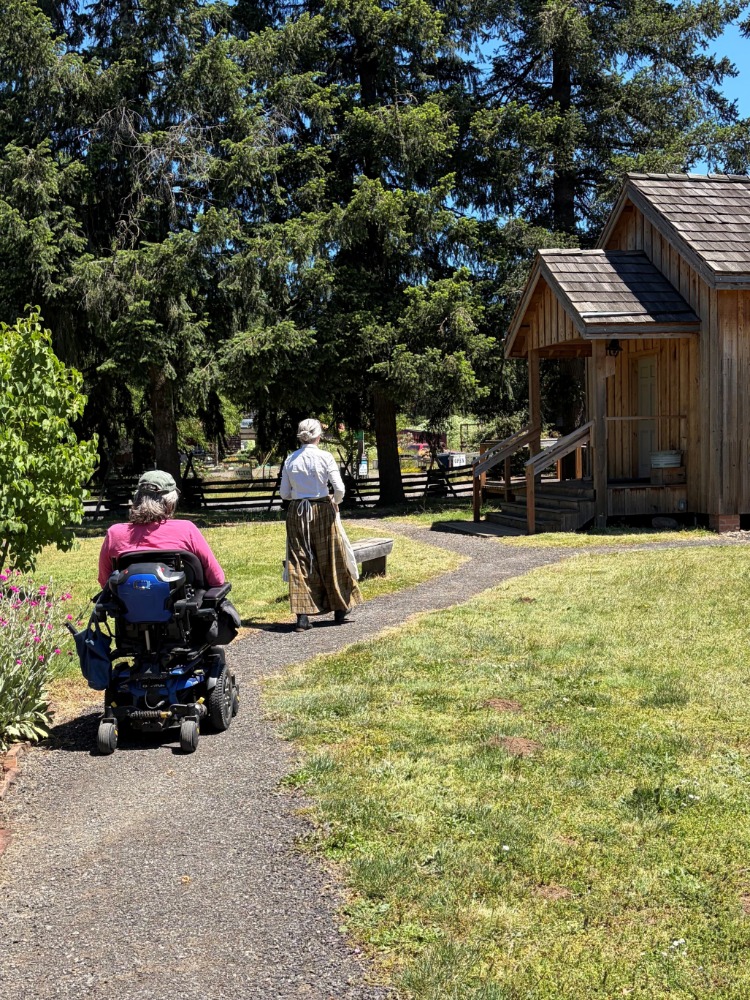
On a sunny summer day, my husband and I eagerly arrived at historic Philip Foster Farm in Eagle Creek for our scheduled farm tour. Philip Foster moved his store to this site from Oregon City in 1847. He added more amenities to the 640-acre property, establishing a farm and major rest stop for pioneers travelling the Oregon Trail along the Barlow Road. Because the farm received a $49,000 Strategic Improvement Program grant in 2024 from Clackamas County Office of Tourism specifically to improve pathways for wheelchair access, I wanted to check it out. Historic sites are tricky regarding wheelchair accessibility. I was pleased with all I could see and do at this significant historic farm using my powerchair!
Chris Bento, senior volunteer, welcomed us at the entrance, immediately setting the mood with her authentic pioneer dress.
Hands-On Pioneer Activities
Chris led us to the 1870’s hay barn, the oldest structure on site, showing us wagons, tools and antique equipment artistically displayed throughout this aged structure. I used the old pulley system to easily lift hay bales. I shucked and ground corn using antique devices, ending with coarse cornmeal and a soft corn cob — just like the pioneers. Nowadays, hundreds of school children learn from these same activities when visiting this farm.
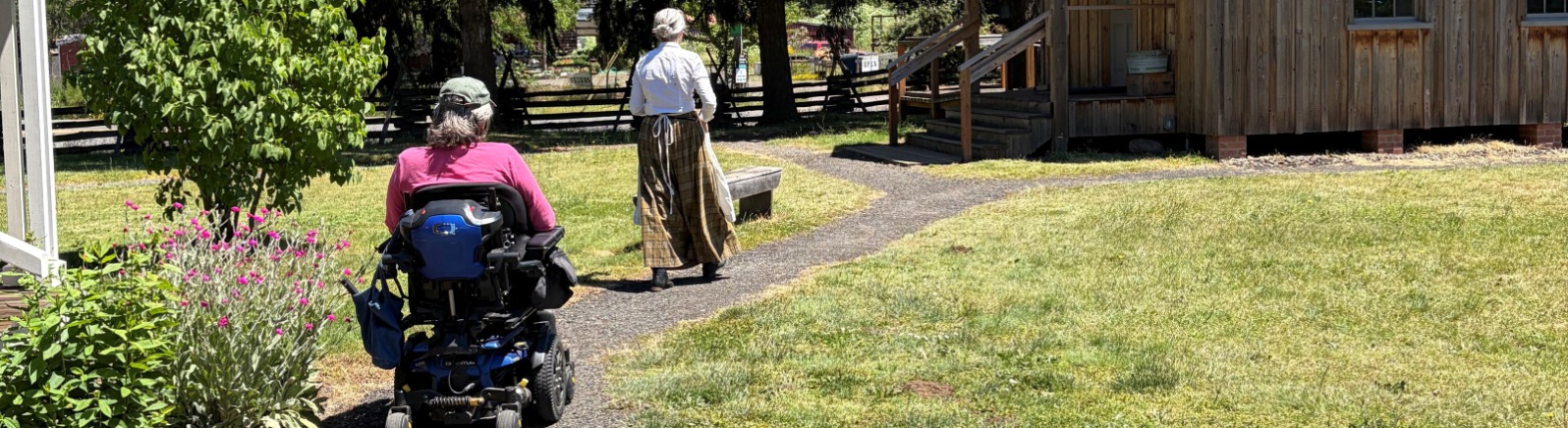
Leaving the barn, we headed to the sawmill, following a level, packed path. I easily rolled into the mill to see giant open saw blades and stacks of cut planks. The scene made me appreciate the risks the mill workers took and the safeguards we have today.
I followed the improved hardened gravelly path to the rustic cabin that was modeled after those rented to pioneers. It now is used for overnight camps. We visited a series of roofed outbuildings or stations, which included a wagon packing station where visitors decide what and what not to bring in the confined wagon, a Lincoln log building station where kids can build their own log cabin, and a wash station, complete with hand-crank wringer, washboard and wash tub. How this made me treasure my washer and dryer! These stations can be accessed using a portable ramp. They provide fun, hands-on learning opportunities about pioneer life.
We visited the schoolhouse replica, which was the first public school in Oregon. Rows of desks were lined up, each desk with its own slate. We toured the beautifully furnished Egbert House and Lucy House, which were accessible via well-designed ramps. I was amazed that I could fit through all doorways on the ground floor in both houses. This is rare for historic homes.
Our last stop was the general store replica, filled with beaded bracelets, candy, books, arrowheads and more. Many items reflected the pioneer days. The store was roomy, well-lit and easy to wheel.
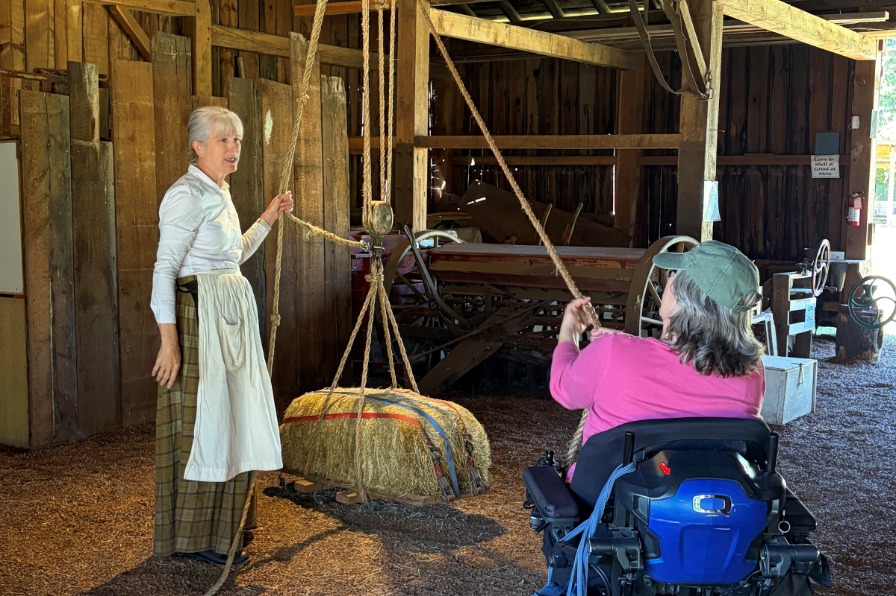
Find hands-on pioneer activities at Philip Foster Farm.
A Wheelchair-Friendly Historic Farm
This entire compound impressed me. Although not technically ADA, the considerations and modifications provided here transformed this historic farm into a nicely wheelchair-friendly experience. The fact that Chris, our tour guide, was knowledgeable and enthusiastic made our experience delightful and memorable!
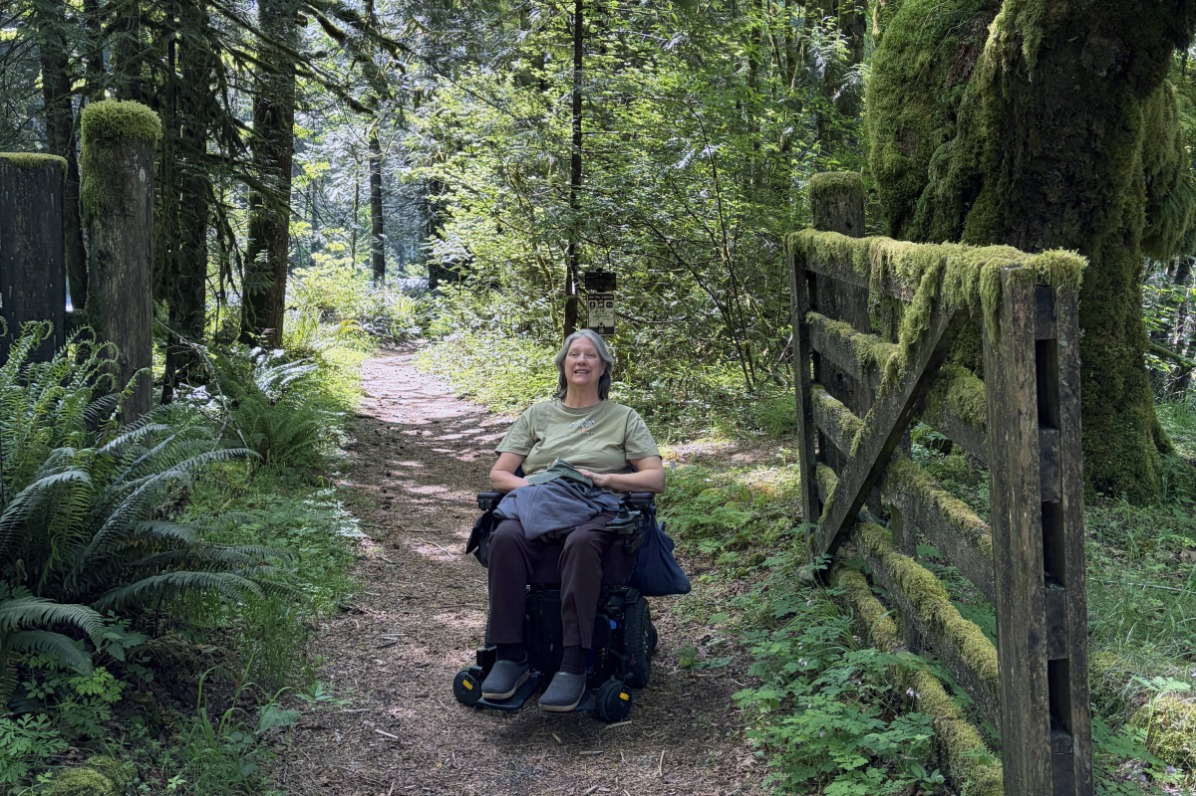
Read more from Lilly about how she followed the historic Barlow Road, which was a key part of the Oregon Trail journey through Clackamas County. Learn from her which Barlow Road landmarks, viewpoints, museums and interpretive sites can be experienced from a wheelchair or mobility device.

Lilly Longshore is an accessible travel writer, a speaker and an advocate/educator for those with physical disabilities and vision impairments. She has written for various magazines including New Mobility, PN Magazine and Cascade Journal, as well as for various travel blog sites. Passionate about traveling and sharing possibilities with others, she adventures via wheelchair and shares the world of travel possibilities through her writing. After retiring from civil/environmental engineering, she continued to give back to her community by serving as parent representative on the Board for the Washington State School for the Blind, on Washington’s Governor’s Committee on Disability Issues and Employment and is currently serving as Community Outreach Chair for Clark County, Washington’s Accessible Communities Advisory Committee. Connect with Lilly through her Wheeling the World Facebook page. Photo by Carla Foth Christian.