






Where To See Spawning Salmon On Mt. Hood
By Guest Author: Matt Wastradowski
Article At A Glance
- When To Go: Salmon spawning season in Mt. Hood Territory runs late September through December, with Chinook peaking in early fall and coho in late November to December.
- Where To See Spawning Salmon: Top viewing spots include Barlow Wayside Park, Wildwood Recreation Site’s Cascade Streamwatch Trail, Sandy River Park, Old Salmon River Trail, Metzler Park and hatcheries in Sandy and Estacada.
- Why Salmon Matter: Salmon spawning sustains the Pacific Northwest ecosystem — providing food and nutrients for forests, wildlife and future salmon generations.
- Where To Stay: Extend your visit with overnight options like the Mt. Hood Oregon Resort along the Salmon River, cabins at the Mt. Hood RV Village Campground or the Best Western Sandy Inn.
The Return Of The Salmon Signals Fall In Oregon
Every September, there are a few signs that fall is descending on the Pacific Northwest. The sun sets a little earlier, the nights get crisp, leaves turn vibrant hues of red and yellow and millions of Chinook and coho salmon return to their native waters to continue the circle of life. “It really is the signal of fall here,” says Cory Sipher, fisheries biologist with the Bureau of Land Management’s Northwest Oregon District. “It's really a unique aspect of living in the Pacific Northwest.”
Since time immemorial, salmon have been inextricably linked to the Pacific Northwest and its peoples. For thousands of years, Native Americans throughout the region subsisted on a salmon-rich diet, used the fish in religious services and traded it with other tribes. Today, salmon remains an important part of tribal culture — and fresh salmon has become the centerpiece of countless menus across Oregon.
It wouldn’t be possible without the annual spawning cycle, which brings millions of Chinook and coho salmon to spawn in rivers and streams throughout the Pacific Northwest. Between late September and December, you can witness this natural marvel in parks, from trails and at hatcheries throughout Oregon’s Mt. Hood Territory.
Here’s what to know about what happens when salmon spawn, where to see spawning salmon and how to make it a memorable part of your next getaway to the foothills of Mt. Hood.

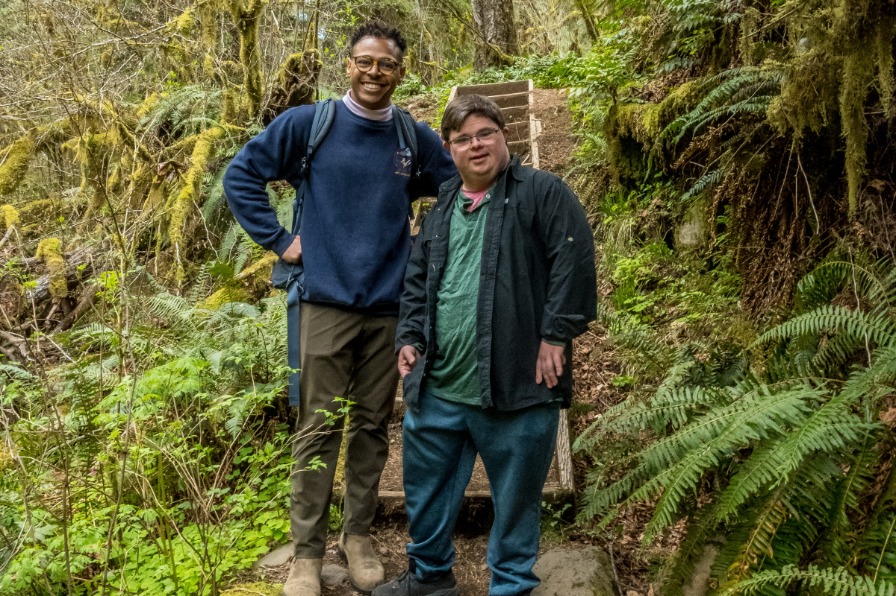
The salmon returning signals fall on Mt. Hood. (Photo courtesy of Bureau of Land Management Oregon and Washington)
Spawning Salmon Reach The End Of A Long Journey
When you see salmon wriggling their way upstream this fall, you’re seeing the final step in a process that began months ago back in the Pacific Ocean.
Each year, adult salmon return from the ocean, swim up the Columbia River, wait for the water temperature to cool and follow the scent back to the rivers, streams and creeks where they were born. There, they spawn and, soon after, die. The season’s first Chinook salmon show in late September and early October, and coho follow in late November and early December; the latter are most commonly seen in smaller side channels, rather than larger rivers, according to Sipher.
Once in their natal home, female salmon find an appropriate area to deposit their eggs. To do so, they use their body and the water current to move rocks around and dig out small depressions in the streambed — called a redd. Males, meanwhile, jockey for position alongside females by developing accentuated teeth and hook jaws — and, when necessary, squaring off for the right to breed.
“They can get pretty aggressive-looking, and that’s just because they’re battling and fighting for position, so they’re often nipping at each other and biting each other,” says Sipher.
When the female is ready, she deposits the eggs — and the males fertilize them soon after; the eggs develop for three months and hatch in early spring, beginning the life cycle anew. Both the adult male and female salmon, however, will be exhausted from the journey and will die shortly after breeding.

Many species of amphibians, birds, butterflies and mammals can be found throughout Oregon's Mt. Hood Territory. You "otter" view wildlife from a safe distance. Use binoculars or a camera with zoom to view animals. This will help to protect you as well as them.
Life Cycle Continues After Spawning
Sipher says the cycle that ends with death shortly after spawning is unique to salmon — and has impacts that go far beyond an egg hatching. “It’s not really normal for a species to die at the end of its life like that, just as it’s spawned, but it’s a super important part of the entire ecosystem of the forest,” he says. “They're giving their lives for the next generation.”
When the salmon reach the streambed where they’ll spawn, Sipher says they’ve been feeding and accumulating nutrients in the ocean for years — all of which they bring to their spawning grounds. When the salmon dies, their remains (and those nutrients) provide food for aquatic insects which, in turn, provide food for juvenile salmon when they begin their ocean-growing journey the following year. Meanwhile, other forest animals, such as bears, river otters, and raccoons, eat the dead and dying adults — and will fertilize the forest floor with those nutrients.
Where To See Spawning Salmon In Mt. Hood Territory
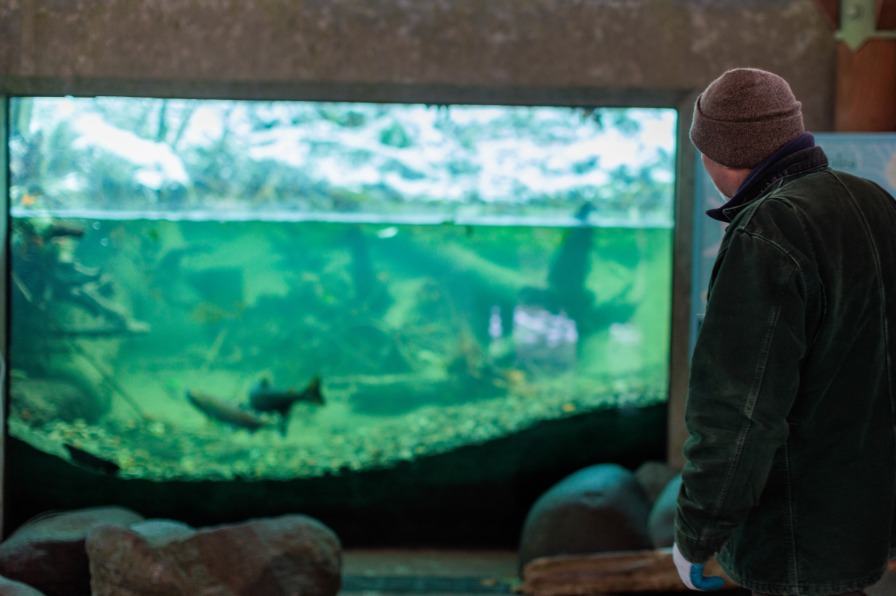
The underwater viewing windows provide a unique perspective at Wildwood Recreation Site. (Photo courtesy of Bureau of Land Management Oregon and Washington)
Whether you’re looking for a peaceful hike in the woods, wheelchair-accessible viewing platforms or a long-running hatchery experience, here’s a look at where to see spawning salmon in Mt. Hood Territory.
- Barlow Wayside Park: Roughly halfway between Sandy and Welches, the cozy Barlow Wayside Park sits just off Highway 26 and along the banks of Sandy River and hosts 1.5 miles of mostly flat hiking trails in the midst of a lush forest. Small wooden platforms and footbridges afford close-up views of the park’s waterways. Before heading out, download a guide to the park’s natural wonders.
- Wildwood Recreation Site: A few miles east of Barlow Wayside Park, Wildwood Recreation Site hosts the paved, wheelchair-accessible Cascade Streamwatch Trail, which leads to underwater viewing windows of a side channel of the Salmon River. In addition to the viewing window, Sipher recommends watching for salmon on the footbridge you’ll cross along the way, as well as on the wooden boardwalks around the wetlands at the southern edge of the site.
- Sandy River Park: Who says you need to leave town for an outdoorsy adventure? Sandy River Park resides in the town of Sandy — and hosts the mile-long Jim Slagle Loop Trail. The trail heads through a forest of Douglas fir and western red cedar and passes both the Sandy River and Cedar Creek — where you might see salmon swimming upstream every autumn.
- Old Salmon River Trail: Looking to make a day of your salmon-viewing experience? Take a hike along the Old Salmon River Trail, which follows its namesake waterway just south of Welches and Zigzag. The gently graded trail occasionally heads close to the shore of the crystal-clear Salmon River, and colorful foliage in the surrounding maple trees adds to the charm. In all, the Old Salmon River Trail covers five miles round-trip, but the out-and-back nature of the footpath makes it easy to stop and turn around whenever you’d like.
- Metzler Park: A few miles south of Estacada, Metzler Park sits where two creeks meet in a lush forest of cedar and Douglas fir — and affords easy opportunities to spy salmon swimming in the sparkling channels. A short footbridge crosses Clear Creek — look down when crossing to see if you can spy any fish below — and heads to a lovely trail through the surrounding forest.
- Sandy Hatchery: The long-running Sandy Hatchery collects and raises several species — including coho and Chinook salmon — at a facility near Sandy. Arrive between October and mid-December to see spawning coho salmon; the peak is usually in early November.
- Clackamas Hatchery: Just outside Estacada, the Clackamas Hatchery collects eggs and rears Chinook salmon. You won't see salmon spawning as they do in nature, but stop by between June and October to view adult Chinook salmon. A cozy visitor center explains the species' life cycle and the hatchery’s role in supporting a healthy fish population.
Where To Stay On Your Trip To Mt. Hood

The tiny homes at Mt. Hood Village are a perfect place to stay while looking for salmon on Mt. Hood.
If you’re looking to extend your stay while trying to spy spawning salmon in Mt. Hood Territory, you have plenty of comfortable overnight options.
Whether you’re heading south to Estacada or up Highway 26, Sandy makes a fine basecamp. Consider a night or two at the Best Western Sandy Inn, which sits in town and offers free bike rentals, an on-site pool and other fun amenities. Further west, Mt. Hood Village Campground hosts RV sites, well-appointed cottages, cabins and adorable tiny homes — and is mere steps from the Villages of Mt. Hood.
Further up Mt. Hood, you don’t even need to leave the property to view spawning salmon at Mt. Hood Oregon Resort, which is south of Welches and along the Salmon River.
Lori Cabantoy, the resort's assistant sales manager, says that salmon are frequently seen from the Foliage Room event space at the on-site Mallards Café & Pub. The room, open to diners and overnight guests when events aren’t taking place, looks out over a small waterfall and ravine near where Wee Burn Creek empties into the Salmon River; there, Cabantoy says it’s not uncommon to see salmon swimming upstream in the second half of October. (Mallards closes for the season on October 31.)
Cabantoy says the sight takes Mt. Hood Oregon Resort guests by surprise. “People think that our creeks and our streams are too small for this kind of activity, and they’re not; they’re quite plentiful,” she says. “It’s really unique to be able to see these animals do what they do and the habitats that they're designed to do it in.”

Matt Wastradowski loves the Pacific Northwest more than any rational human should — and has written extensively about the region's best craft beer, natural beauty, fascinating history, dynamic culinary scene and outdoor attractions for the likes of Outside, Portland Monthly, AAA's Via magazine and Northwest Travel & Life.
Since 2018, he's also authored three Oregon-centric guidebooks for Moon Travel Guides — one on scenic hikes, one on the Columbia River Gorge and Mt. Hood and a general guidebook to the Beaver State's top sites.