




Huckleberry Inn Brings Together Historic Charm, Filling Fare In Government Camp
By Guest Author: Matt Wastradowski
Article At A Glance
- A variety of lodging options allows you to choose from cozy single rooms for solo travelers to spacious loft-style suites that sleep up to 10 guests.
- On-site dining features hearty diner fare and signature huckleberry dishes — from hotcakes and pies to thick milkshakes made with local berries.
- In the heart of Government Camp, steps from restaurants, shops and the Mt. Hood Cultural Center & Museum. Additionally, the inn is minutes from Trillium Lake, the historic Barlow Road and year-round recreation on Mt. Hood’s slopes and trails.
For roughly 60 years, the Huckleberry Inn has been a community institution in Government Camp, the highest community on Mt. Hood and a hub of year-round outdoor recreation.
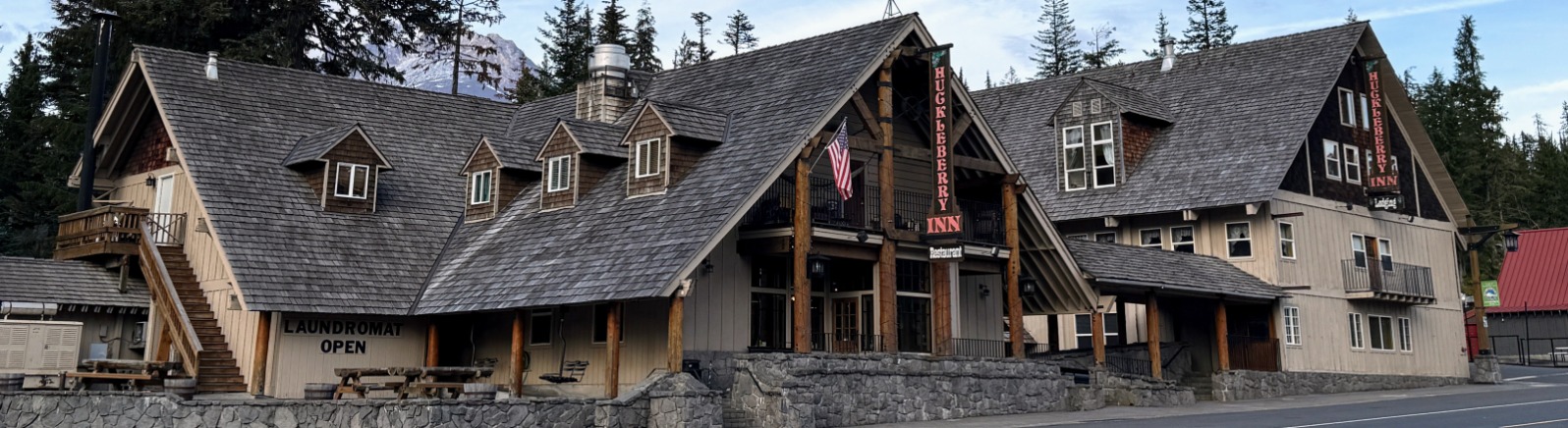
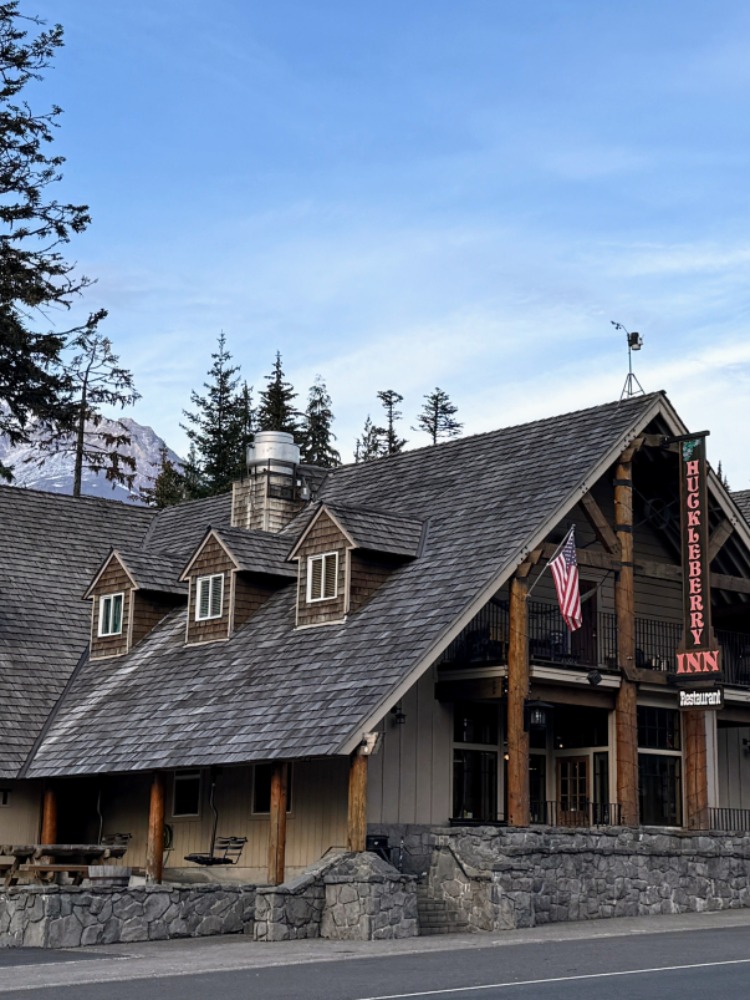
The hotel and a restaurant of the same name occupy a pair of wood-and-stone A-frame buildings that evoke ski lodges in a variety of creative ways. Wooden picnic tables cover the patio, wrought-iron banisters line the stairways and alpine-inspired woodwork can be found in each of the hotel rooms. The restaurant, meanwhile, serves filling fare that warms diners up after a day on the slopes, and old-school ski photos cover walls all over — revealing a fascinating slice of local history.
When I planned a fall getaway to Mt. Hood, just after the busy summer season and before winter’s first snow blanketed the mountain’s slopes, I knew I wanted to spend a night at the cozy inn. I’ve always enjoyed the spartan, comfortable nature of the hotel; some of the on-site restaurant’s traditional diner fare is made with locally picked huckleberries and the quiet streets of Government Camp quickly give way to bustling outdoor opportunities nearby.
Here’s more about my stay at the Huckleberry Inn, along with why you should make it part of your next stay in Government Camp — and why you should make sure to save room for the restaurant’s signature sweets.
Variety Of Overnight Stays Available At The Huckleberry Inn
In all, the Huckleberry Inn’s overnight options range from basic rooms with one queen bed to spacious, lodge-like accommodations that sleep up to 10.
On the smaller size, compact rooms — like the one I had — cater to solo travelers and couples who’ll spend more time on the trail than in the hotel; they’re adorned with ski lodge-style bedframes and furniture, as well as vintage photographs showcasing outdoor fun on Mt. Hood. Larger rooms, meanwhile, come with spiral staircases that lead to lofts and offer plenty of space for gear storage. Some rooms have couches and in-room desks.
I was traveling solo, and I couldn’t have been happier with my cozy, comfortable room — whose vibes were appropriate for the ski-inspired surroundings. I didn’t need any fancy amenities and was particularly grateful for how close I was to the nearby sites; when the clouds broke around dinnertime, for instance, I was only about a 10-minute drive from the southern shore of the Trillium Lake Day Use Area — where I took in a lovely sunset.
Speaking of which: Part of the Huckleberry Inn’s charm resides in the on-site amenities and offerings at the hotel’s doorstep. A laundromat sits next door (perfect for washing your clothes after a day on the trail or slopes) and a room on the lower level is reserved specifically for waxing your skis.
Its central location within Government Camp, meanwhile, means the Huckleberry Inn is a short walk from local food-and-drink stops in case you’d like to try something beyond the on-site restaurant. A few popular stops include The Taco Shoppe (which serves fresh Mexican dishes) and Charlie’s Mountain View (which has been serving cold drinks and filling pub fare since 1977). Just a block away, Govy General Store carries all the essentials for outdoor adventures; that includes fresh food, cold drinks and passes and permits for local Sno-Parks and trailheads.
On-Site Restaurant Dishes Large Portions Of Comfort Fare
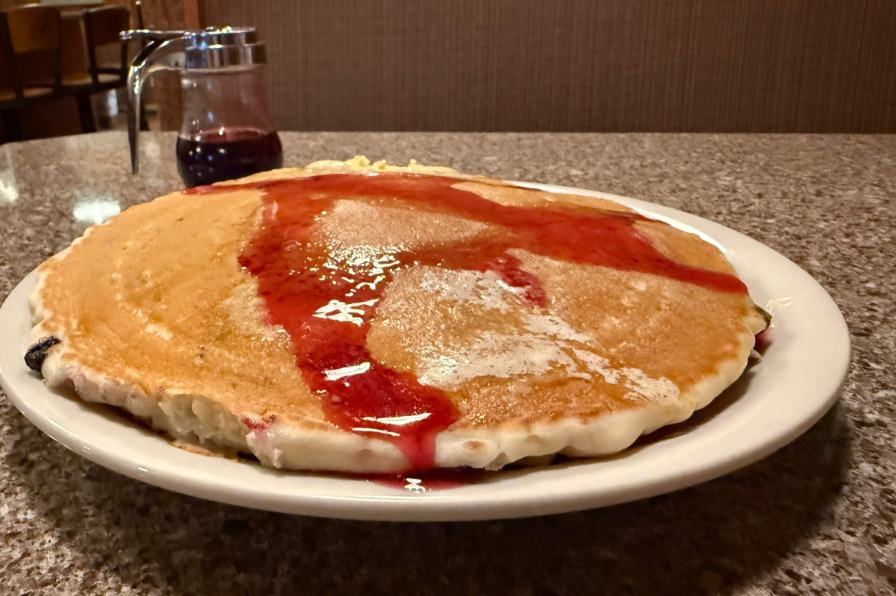
Made with fresh, local berries, the huckleberry pancakes are a must-try at the Huckleberry Inn.
The Huckleberry Inn offers far more than a comfortable place to rest your head. Open for breakfast, lunch and dinner, the on-site restaurant has been welcoming hungry diners since 1966. It resides downstairs and is beloved for a wide-ranging menu of hearty fare that encompasses omelets, hotcakes, sandwiches, burgers and down-home classics — like spaghetti, chicken-fried steak and top sirloin.
Befitting the restaurant's name, dishes prepared with wild huckleberries, picked in the forests of Mt. Hood, are the star of the menu. Huckleberry dishes include hotcakes (served with huckleberry syrup on the side), slices of pie (available a la mode, of course) and a milkshake (topped with fresh berries). I started my day with a plate of huckleberry hotcakes topped with a few dollops of huckleberry syrup — and enjoyed every bite of the regional delicacy. The syrup, in particular, struck a balance between sweet and tart, adding subtle pops of flavor to the dish.
No matter what you order, arrive hungry: The portions are massive — so much so, I couldn’t finish my short stack (comprising just two pancakes). It was a good problem to have.
Government Camp Sits Surrounded By Outdoor Recreation, Fun Attractions
No visit to Mt. Hood is complete without outdoor adventures, and a stay at the Huckleberry Inn puts you right in the middle of fun.
One delightful stop is the Trillium Lake Day Use Area. A busy summertime stop, Trillium Lake quiets considerably in autumn and blends wide-open views of Mt. Hood with colorful foliage between late October and early November. On my weekday visit in early October, I followed the two-mile Trillium Lake Loop through a stately forest and along the banks of the reservoir — and encountered only a handful of fellow hikers along the way. Pack a lunch in case you’d like to savor a picnic at one of a few tables along the southern shore. One fun highlight was the wheelchair-accessible boardwalk that had been recently installed along the footpath.
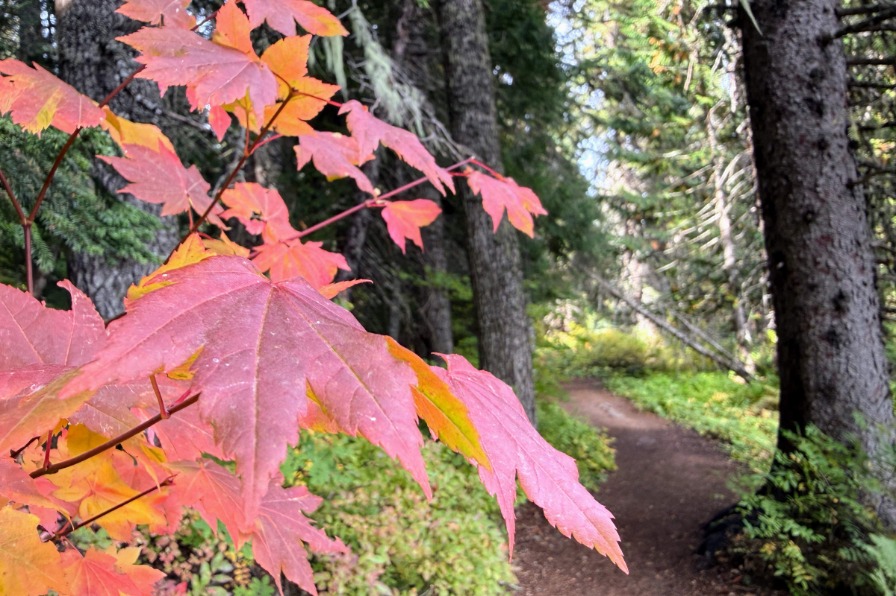
Fall is the perfect time to visit the trails of Mt. Hood.
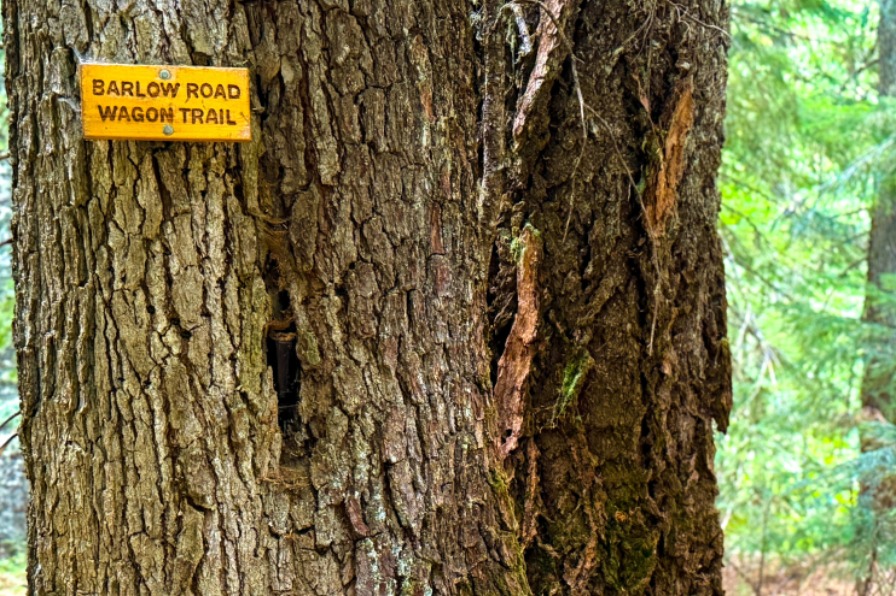
I also spent a little time checking out sites from along the Barlow Road, which took Oregon Trail emigrants south around Mt. Hood and into the Willamette Valley in the mid-1800s. The onetime toll road roughly followed the path of modern-day Highway 26, and a few sites today offer hints at what the journey was like for the area’s European-American settlers. The Pioneer Bridle Trailhead, ostensibly an endpoint for mountain bike riders on its namesake trail, hosts a replica tollgate and a few interpretive panels on the Barlow Road. Further up the mountain is the Laurel Hill Chute Loop Hike, a quick (steep) path that traces an especially treacherous stretch of road for Oregon Trail emigrants.
If you’d rather stay indoors, save an hour or two for the Mt. Hood Cultural Center & Museum, which sits just a two-minute walk from the Huckleberry Inn. The long-running museum shares the history of outdoor recreation on Mt. Hood through vintage skis, photographs, and other artifacts; one display, for instance, pays tribute to the U.S. Forest Service with a replica fire lookout. The museum doubles as a visitor center, and friendly team members are happy to answer any trip-planning questions you may have. I’ve perused the museum on almost every visit to Government Camp in recent years, and I learn something new on every trip.
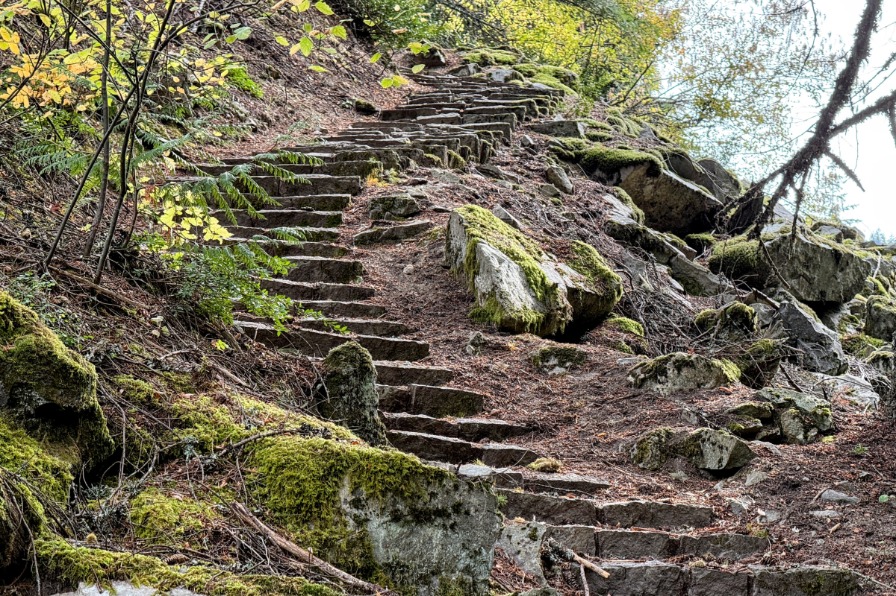
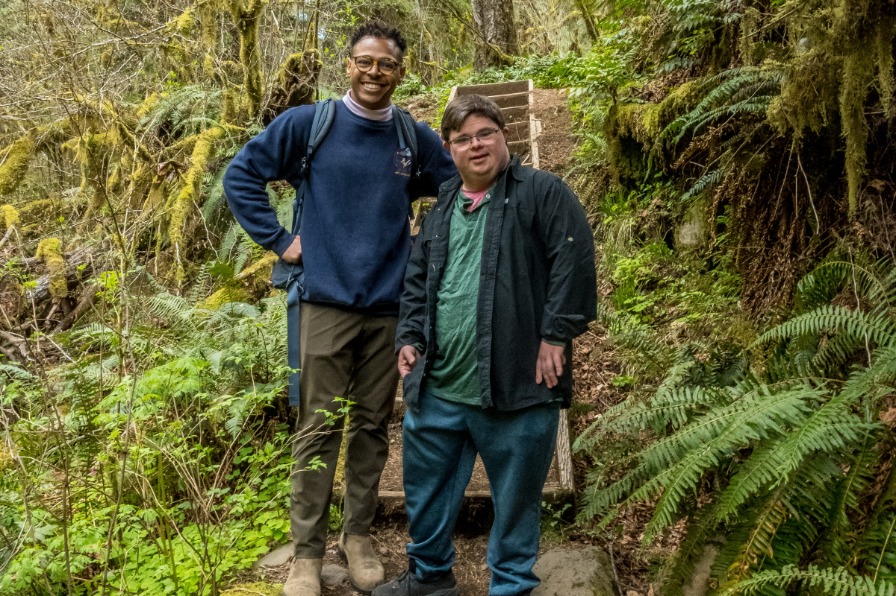
The steps of the Laurel Hill Chute hike lead to an especially treacherous part of the Barlow Road.

Matt Wastradowski loves the Pacific Northwest more than any rational human should — and has written extensively about the region's best craft beer, natural beauty, fascinating history, dynamic culinary scene and outdoor attractions for the likes of Outside, Portland Monthly, AAA's Via magazine and Northwest Travel & Life.
Since 2018, he's also authored three Oregon-centric guidebooks for Moon Travel Guides — one on scenic hikes, one on the Columbia River Gorge and Mt. Hood and a general guidebook to the Beaver State's top sites.