




Why You Should Plan A Trip To Government Camp This Fall
By Guest Author: Matt Wastradowski
Article At A Glance
- Government Camp, the highest community on Mt. Hood, is most popular in summer and winter.
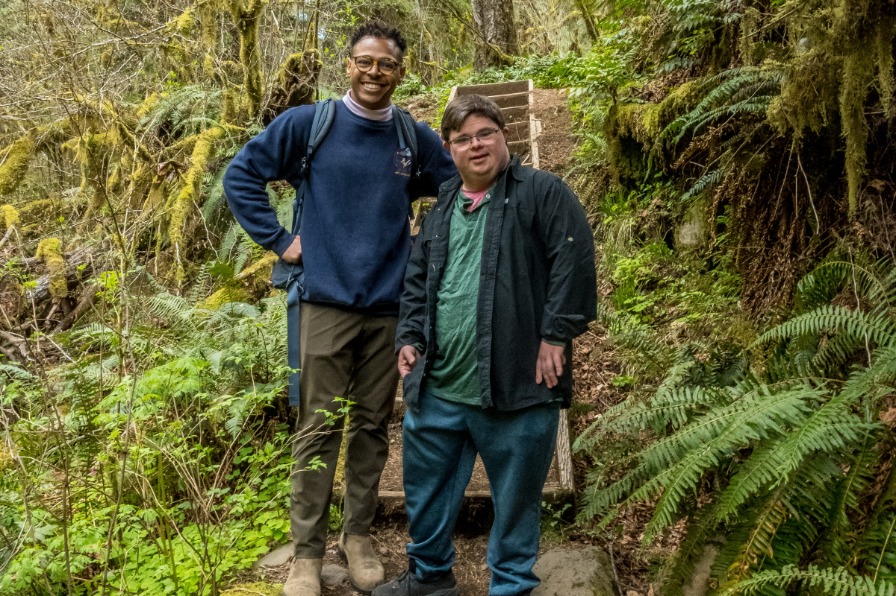
- In fall, however, you’ll enjoy colorful fall foliage along hiking trails, solitude in local restaurants and relaxed experiences all over town.
- Restaurants in Government Camp serve a wide range of cuisines, from pub grub to German-inspired entrées.
- Book your stay at the Huckleberry Inn, a chalet-like lodge that sits within a short walk of the town’s most popular sites and bites.
Just about everyone has a favorite season on Mt. Hood and in Government Camp. Some enjoy hiking through forests, past wildflowers and to waterfalls in summer — while others love nothing more than hitting the slopes for a day of skiing or snowboarding on Oregon’s tallest peak in winter.
Me? I’m partial to fall on Mt. Hood. Yes, fall.
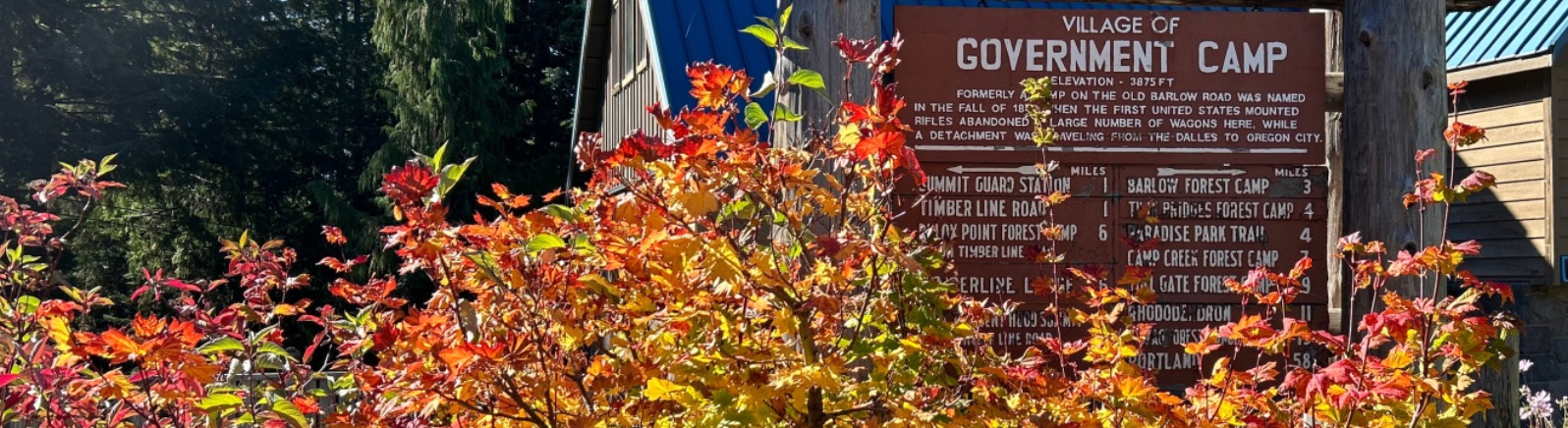
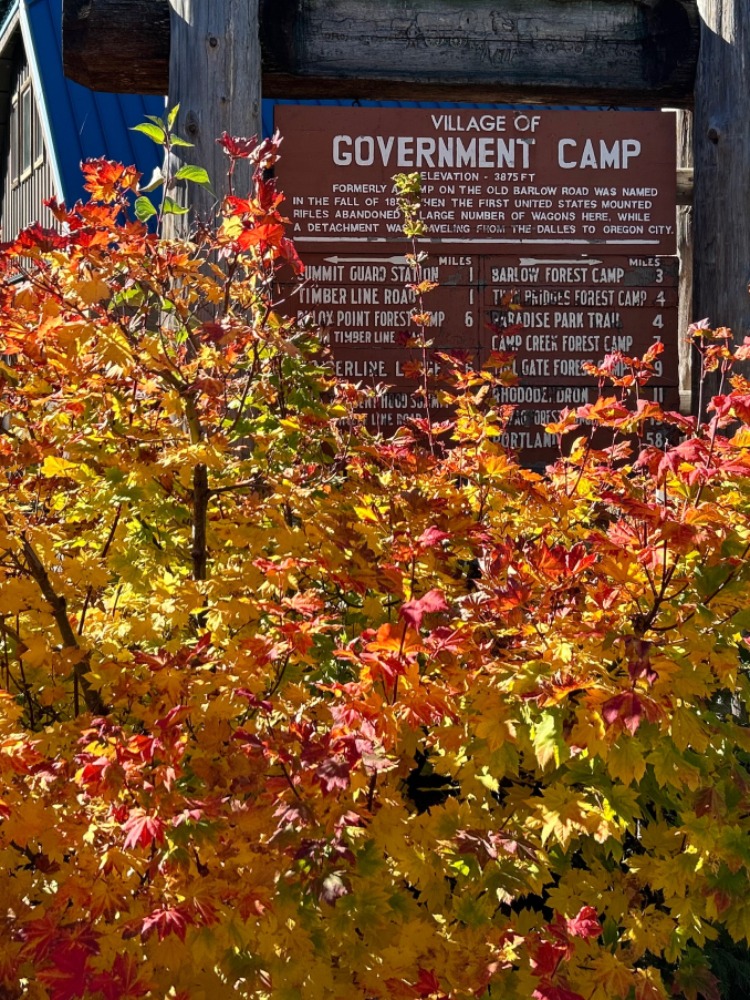
Autumn brings the best of all possible worlds to Government Camp, the highest community on Mt. Hood. Rain remains relatively rare in October, when highs range from a brisk 50ºF to a crisp 60ºF — perfectly pleasant for a day outdoors. On the rare instances when snow has fallen on past autumn getaways, it’s been short-lived, rarely stuck and melted before I finished breakfast. Hawks, eagles and nutcrackers fly through on their southward migration. Vine maple explodes in eye-popping shades of red, orange and yellow. And I almost never have to wait for a table at my favorite restaurants or a seat at the bar in homegrown pubs, even on Friday and Saturday nights.
If I’ve at least piqued your curiosity, allow me to make the case for why you should plan a weekend escape to Mt. Hood and Government Camp this fall.
Colorful Foliage, Fascinating Museum Offer Fall Fun
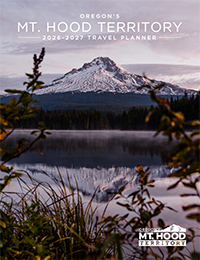
Perhaps my favorite fall activity is a relaxing walk around Trillium Lake.
In summer, Trillium Lake welcomes scores of hikers, campers, picnickers and paddlers; come winter, the lake is one of the region’s best-loved snowshoeing and cross-country skiing destinations. But in fall, the crowds clear out, leaving the occasional paddler and handfuls of hikers alone with some of Mt. Hood’s best fall foliage. The mostly flat Trillium Lake Loop circles the reservoir, darting in and out of the forest while offering occasional views of Mt. Hood (especially early and late on the hike) and passing colorful vine maple displays. This trail includes the Trillium Lake boardwalk section, that was completed last fall with support from the Clackamas County Office of Tourism. The boardwalk allos for a portion of the trail to be accessible for visitors with limited mobility. If you’re not ready to call it a day, bring lunch to one of the picnic tables on the southeast lakeshore for a shady canopy that doesn’t skimp on photo-worthy views. Further down the mountain, just 20 minutes west of Government Camp, the wooded Old Salmon River Trail passes colorful bigleaf maple trees along the banks of its namesake waterway.
Travel tip: In summer and fall, a private vendor collects a $10 day-use fee on the main access road to Trillium Lake; the only pass you can present in lieu of payment is an annual Northwest Forest Pass, which runs $30 and is available online and at stores throughout Mt. Hood Territory. This is one of the rare U.S. Forest Service lands not to accept daily Forest Passes or annual America the Beautiful Passes by way of payment. Cash and credit or debit cards are accepted.
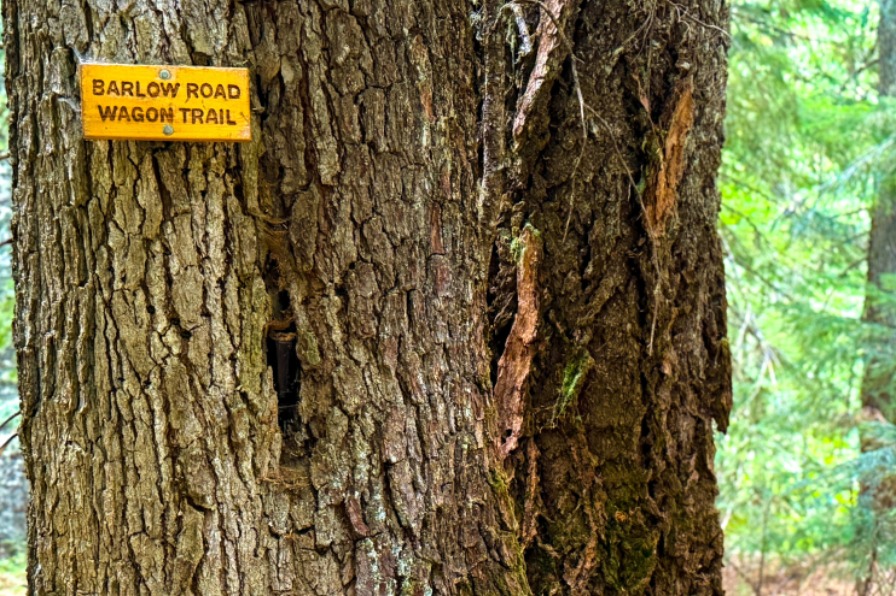
When the indoors are calling, meanwhile, I’m always fond of whiling away a few hours at the Mt. Hood Cultural Center & Museum right in Government Camp. I love the wide-ranging approach the museum takes to telling the story of life on Mt. Hood — like its wide-ranging ski display (and how skis evolved as recreation grew in the area), insight on the Barlow Road, an exhibit on the ill-fated Mt. Hood Skiway and a replica fire lookout that pays tribute to the U.S. Forest Service and its role in keeping us safe. As a nice bonus, the Mt. Hood Cultural Center & Museum doubles as a visitor center — so whoever’s running the front desk is always happy to provide brochures, maps and recommendations for where to go when I’m feeling indecisive.
Government Camp Restaurants Offer Something For Everyone
Whether I’m gearing up to go leaf-peeping around Trillium Lake or want to kick back after another enjoyable museum visit, I’m always delighted by the eclectic cuisines available around Government Camp.
More often than not, you’ll find me starting my day over a stack of huckleberry pancakes at the Huckleberry Inn; several of the old-school diner’s dishes spotlight the juicy treat, which grows in abundance each summer on the slopes of Mt. Hood.
Later in the day, I let my appetite guide me:
- If I’ve hiked all day with friends, you’ll find us huddled over thin-crust pizzas and a pitcher of local beer at The Ratskeller.
- Other times, I’m starving for a pretzel with fondue, chicken schnitzel or other German dishes at the alpine-inspired Glacier House. Every October, the cozy pub hosts what it calls “the world’s smallest Oktoberfest” — complete with sausages and live music.
- If I’m craving a cold one, I’ll end the night at Charlie’s Mountain View, which has been pouring stiff drinks in a lively restaurant and pub since 1977; the Charlie’s bar doubles as a kind of living history museum, and its walls are chockablock with stickers, historic photographs from Mt. Hood, vintage skis and artwork that pays homage to the community’s ski culture.
Travel tip: Many restaurants in Government Camp keep limited hours in fall. Some are only open for breakfast and lunch, others might open only for dinner and several welcome diners exclusively on weekends. If you’re planning a midweek getaway for an extra dash of solitude, it’s worth reaching out to any restaurants you’re eyeing to see what their hours might be.
Huckleberry Inn Offers Cozy Comfort In The Heart Of Government Camp
I’ve spent a few fall nights over the years at the Huckleberry Inn, which has been welcoming guests since 1966. Today, the building looks the part of a chalet-like ski lodge — complete with wood and stone exteriors, a sharply sloped roof, plenty of gear storage and a room for ski waxing on the lower level.
I keep coming back because the Huckleberry Inn checks all the boxes for what I’d like from an overnight stay in the midst of so much outdoor recreation:
- With rates topping out around $200 per night for a standard room, it’s a budget-friendly go-to in a prime location — the heart of Government Camp.
- The beds are comfortable, which I’m especially grateful for after a hike to Mirror Lake and up the slopes of Tom Dick and Harry Mountain, and the walls are thick enough so I don’t hear my neighbors coming and going.
- Parking is easy to come by just outside the hotel, especially during the quiet fall season.
- The Huckleberry Inn keeps it local and has been family-owned-and-operated since opening 60 years ago.
If you’d like to learn more, see all about my stay at the Huckleberry Inn. I can’t wait to see you on the trail or around town this fall.

Matt Wastradowski loves the Pacific Northwest more than any rational human should — and has written extensively about the region's best craft beer, natural beauty, fascinating history, dynamic culinary scene and outdoor attractions for the likes of Outside, Portland Monthly, AAA's Via magazine and Northwest Travel & Life.
Since 2018, he's also authored three Oregon-centric guidebooks for Moon Travel Guides — one on scenic hikes, one on the Columbia River Gorge and Mt. Hood and a general guidebook to the Beaver State's top sites.